


- Blue Carbon-Storing Ecosystems in Indonesia
- Ecological and Social Benefits
- Threats to Blue Carbon in Indonesia
- Conservation and Restoration Strategies
- Blue Carbon in Policy and Carbon Trade
Indonesia, as an archipelagic nation with the second-longest coastline in the world, plays a crucial role in climate change mitigation through its coastal ecosystems. Blue carbon refers to carbon absorbed and stored by vegetation and sediments in coastal and shallow marine areas. In Indonesia, mangrove forests, seagrass beds, and tidal swamps contribute substantial carbon storage capacity, surpassing that of tropical terrestrial ecosystems. Understanding and conserving these ecosystems is key to achieving the national net zero emission target.
Blue Carbon-Storing Ecosystems in Indonesia
Mangrove forests in Indonesia cover 3.49 million hectares, mainly along the western coast of Sumatra, Kalimantan, Sulawesi, and Papua. The dense mangrove roots trap sediment and organic matter, enabling carbon accumulation in the soil up to several meters deep. On average, carbon storage in Indonesian mangrove biomass reaches 250–350 tons C per hectare, while sediment carbon may exceed 1,000 tons C per hectare.
Seagrass beds, covering approximately 685,000 hectares of shallow waters, also play a significant role. These ecosystems store carbon efficiently in their root networks and underlying sediments, with estimates ranging from 140–200 tons C per hectare. In addition to acting as carbon sinks, seagrass beds support biodiversity, serve as nurseries for fish, and protect the seabed from erosion.
Tidal swamps or brackish water swamps along the eastern coast of Sumatra and Kalimantan add further absorption capacity through freshwater vegetation and deposited organic matter. Although smaller in area compared to mangroves and seagrass, tidal swamps contribute 50–100 tons C per hectare, reinforcing Indonesia’s role in the global carbon cycle.
Ecological and Social Benefits
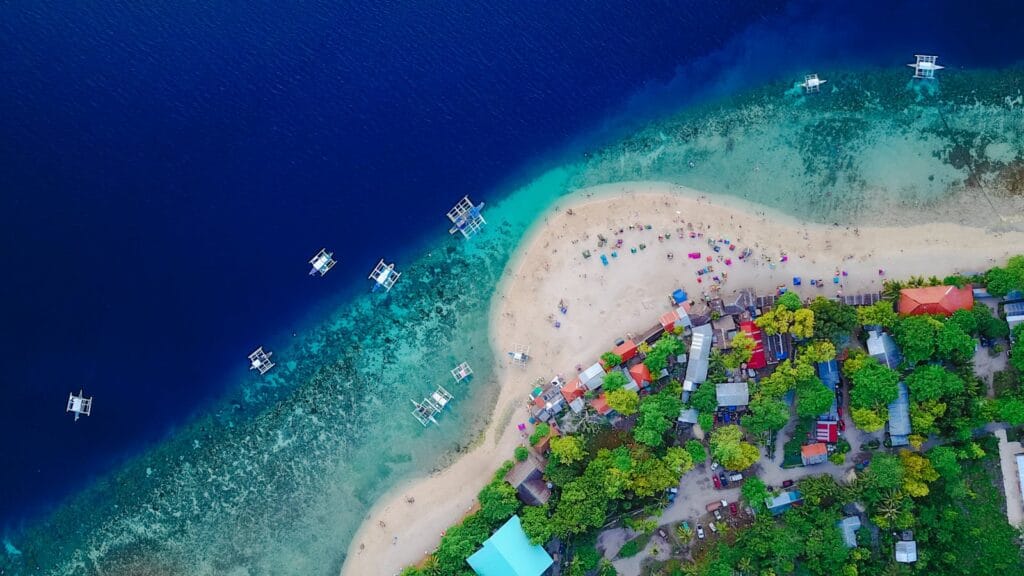
Blue carbon ecosystems offer significant ecological and social benefits. They function as natural CO₂ sinks, slowing the pace of global warming by storing organic carbon that degrades very slowly. Mangrove and seagrass ecosystems act as long-term reservoirs, providing crucial mitigation services.
Coastal vegetation also serves as a natural barrier against waves, abrasion, and tidal flooding. Studies show that mangrove areas can reduce coastal damage by up to 70% during tropical storms, minimizing both economic losses and human casualties. Furthermore, the conservation of blue carbon ecosystems supports local livelihoods.
These areas provide sustainable fisheries and ecotourism opportunities. Coastal communities benefit from aquaculture, shellfish harvesting, and managed firewood resources. Restoration projects often involve local populations, raising environmental awareness while improving economic prospects.
Threats to Blue Carbon in Indonesia
Despite their importance, these ecosystems face several threats. Land conversion for shrimp farming and coastal housing development has resulted in up to 30% mangrove deforestation since the 1970s. Clearing these lands releases stored carbon from soil and vegetation, worsening atmospheric CO₂ concentrations.
Pollution, including plastic waste, fertilizers, and industrial runoff, disrupts the natural carbon cycle. Such pollutants inhibit seagrass photosynthesis and damage mangrove health, reducing their carbon absorption capacity. Additionally, destructive fishing practices like blast fishing and bottom trawling damage seagrass beds and coral reefs, decreasing carbon storage areas and threatening ecosystem services.
Conservation and Restoration Strategies
Preserving and restoring blue carbon ecosystems is essential to maintain their role in climate change mitigation and coastal protection. Without proper intervention, the degradation of mangroves, seagrass beds, and tidal swamps could lead to irreversible carbon loss and weakened ecosystem services. Therefore, targeted strategies that combine ecological restoration with community participation and economic incentives are crucial to ensure long-term sustainability.
Mangrove Restoration
The National Mangrove Rehabilitation Program has planted over 20 million mangrove seedlings along the coast. Best practices include planting native species, managing tidal water, and involving communities in monitoring efforts.
Seagrass Bed Recovery
Seagrass restoration involves transplanting healthy donor plants, replanting, and improving water quality. Collaboration between government, academia, and NGOs supports research and drone-based monitoring to assess restoration success.
Incentive Schemes for Blue Carbon Use
The implementation of Payment for Ecosystem Services (PES) provides compensation to communities for the environmental services they offer. The Blue Carbon Payment project in Sulawesi, for example, pays fishermen to preserve natural mangroves instead of converting them into shrimp ponds.
Blue Carbon in Policy and Carbon Trade
Blue carbon is increasingly recognized in national policy and carbon markets. Indonesia has included coastal ecosystem conservation and restoration in its Nationally Determined Contributions (NDC) under the Paris Agreement, targeting an additional 600,000 hectares of mangrove coverage by 2030. The IDX Carbon Exchange facilitates domestic carbon trading, including credits from blue carbon projects.
Read more:
Turning Emissions into Action Through IDXCarbon and National Carbon Trading
This system encourages private and international investment to finance restoration and conservation efforts. Measurement, Reporting, and Verification (MRV) standards have also been developed to ensure accuracy in carbon calculations. These protocols integrate satellite data, field monitoring, and GIS-based soil modeling to streamline reporting.
Developing impactful blue carbon projects requires expert support. From project design and feasibility analysis to verification and carbon market integration, every step ensures your initiative meets international standards and achieves maximum environmental benefits. Act now and make your project part of Indonesia’s climate solution. Start planning your blue carbon initiative today! Increase the value of your blue carbon project in the global market. Consult your project development strategy with a team of experts.
Author: Nadhif
Editor: Sabilla Reza
References:
Hilmi, N., Chami, R., Sutherland, M. D., Hall-Spencer, J. M., Lebleu, L., Benitez, M. B., & Levin, L. A. (2021). The role of Blue Carbon in climate change mitigation and carbon stock conservation. Frontiers in Climate, 3, Article 710546.