
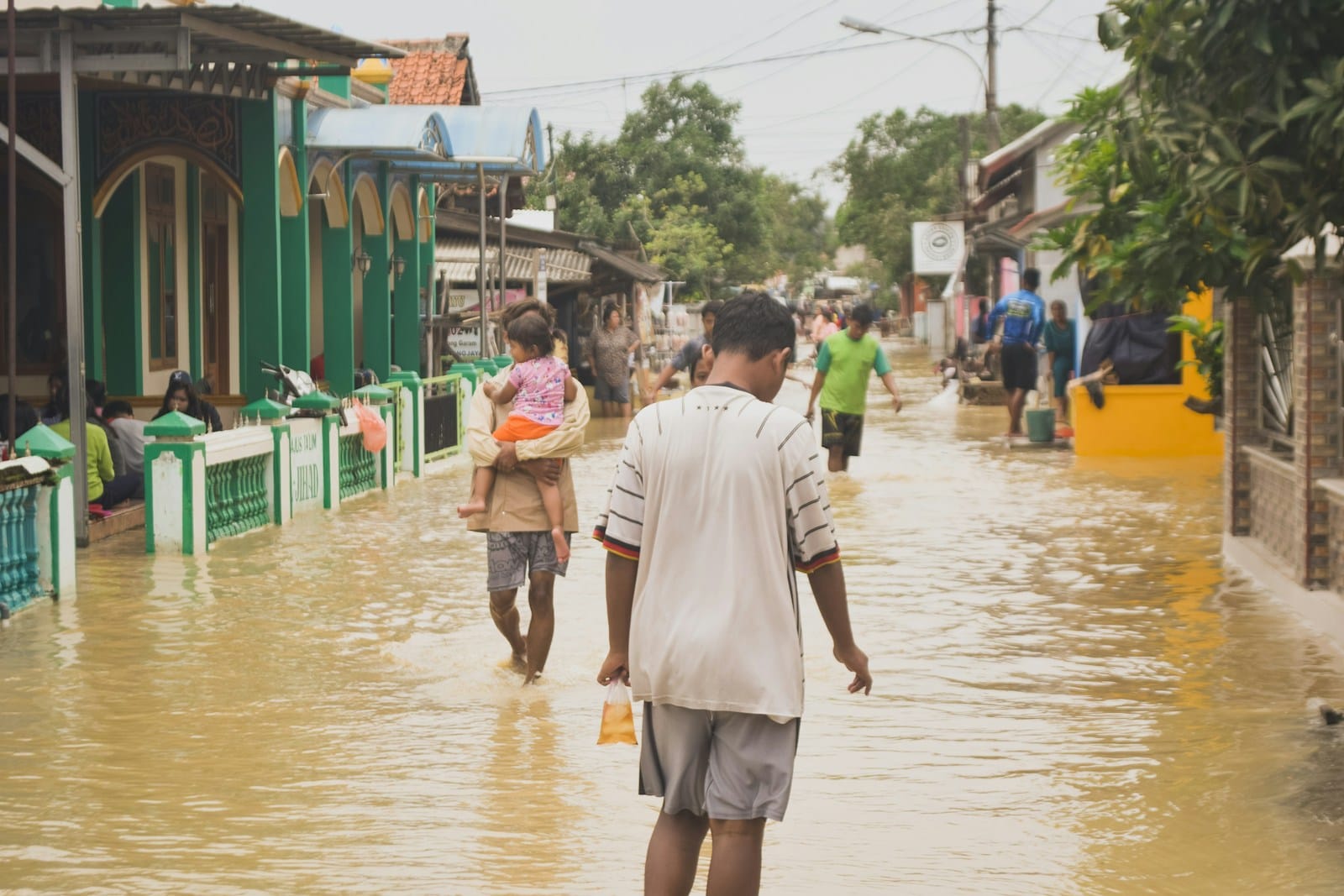

The recent floods across parts of Sumatra have once again highlighted how environmental degradation and weak governance intersect with climate-driven hazards. These disasters are not happening in isolation. They are the result of long-term landscape changes, particularly deforestation, that increase runoff, destabilize watersheds, and magnify the destructive potential of seasonal rainfall.
As communities face loss of homes, livelihoods, and public infrastructure, the question arises: how can corporate sustainability and ESG reporting meaningfully contribute to risk reduction?
- Environmental Pressures and Corporate Accountability
- Social Inequality and Disaster Exposure
- Governance Gaps in ESG Reporting
Environmental Pressures and Corporate Accountability
Sumatra’s forests play a critical role in regulating hydrological systems. When these ecosystems are cleared or degraded, soil loses its ability to absorb water, leading to more severe downstream flooding. Scientific evidence shows that deforestation in tropical regions directly amplifies both the frequency and intensity of floods, making surrounding communities more vulnerable to climate extremes.
This makes the environmental dimension of ESG, land stewardship, biodiversity protection, and responsible sourcing, highly relevant for companies operating in or sourcing from Indonesian landscapes. Yet, disclosures in many sustainability reports often remain surface-level, focusing on carbon or waste metrics while neglecting the long-term hydrological impacts of land-use change.
In moments like the floods in Sumatra, these gaps become visible. Communities are left to bear the costs, while corporate reporting frameworks still struggle to capture ecosystem degradation as a material financial and social risk.
Social Inequality and Disaster Exposure
Floods consistently reveal patterns of inequality. The communities most affected are often those living near riversides, plantation edges, or forest margins, spaces shaped by land concessions, agricultural expansion, and historical power imbalances. Recent scholarship shows that climate disasters and social disparities reinforce each other, trapping vulnerable groups in cycles of slow recovery, limited access to aid, and declining wellbeing.
ESG’s Social pillar is meant to address this: fair labor practices, community engagement, and equitable development. But the Sumatra floods show that existing social disclosures rarely account for how corporate land-use decisions can exacerbate local vulnerabilities. Without integrating disaster exposure and social inequality into sustainability reporting, companies may unintentionally overlook the harm generated by their operations or supply chains.
Governance Gaps in ESG Reporting
The Governance pillar is often the most overlooked, yet it shapes whether ESG commitments translate into real risk reduction. Strong governance means robust oversight, transparent decision-making, and long-term stewardship. Weak governance, on the other hand, allows environmental risks to accumulate until they manifest as disasters.
Recent research identifies a major gap: ESG frameworks are expanding, but their integration into disaster prevention and inequality reduction remains limited. Many reports still treat extreme events as isolated incidents rather than predictable consequences of mismanaged landscapes. This disconnect reduces ESG’s ability to function as a resilience-building tool and limits investors’ understanding of systemic risks.
Read more:
Assessing The Corporate Sustainability Performance using ESG Rating
The floods in Sumatra underscore why governance needs to evolve. Companies with significant land footprints should report not only compliance indicators, but also watershed impacts, landscape-level risks, and community-level vulnerabilities. Integrating disaster scenarios, land-use transparency, and ecosystem monitoring into governance disclosures would allow ESG reporting to better reflect real on-the-ground risks.
Validerra provides consulting services and environmental documentation development for AMDAL, along with carbon emissions calculations to support sustainable development. Entrust your environmental documentation to Validerra so that climate change mitigation can begin from the planning stage.
Author: Ainur Subhan
Editor: Sabilla Reza
Reference:
Bradshaw, C. J. A., et al. (2007). Global Evidence that Deforestation Amplifies Flood Risk and Severity. Global Change Biology.
Chen, X., et al. (2025). Synergies and Gaps in ESG, Climate Disasters, and Social Inequality: A Literature Review. Climate.